MarketPlay
Learn how money works by making decisions and seeing what follows.
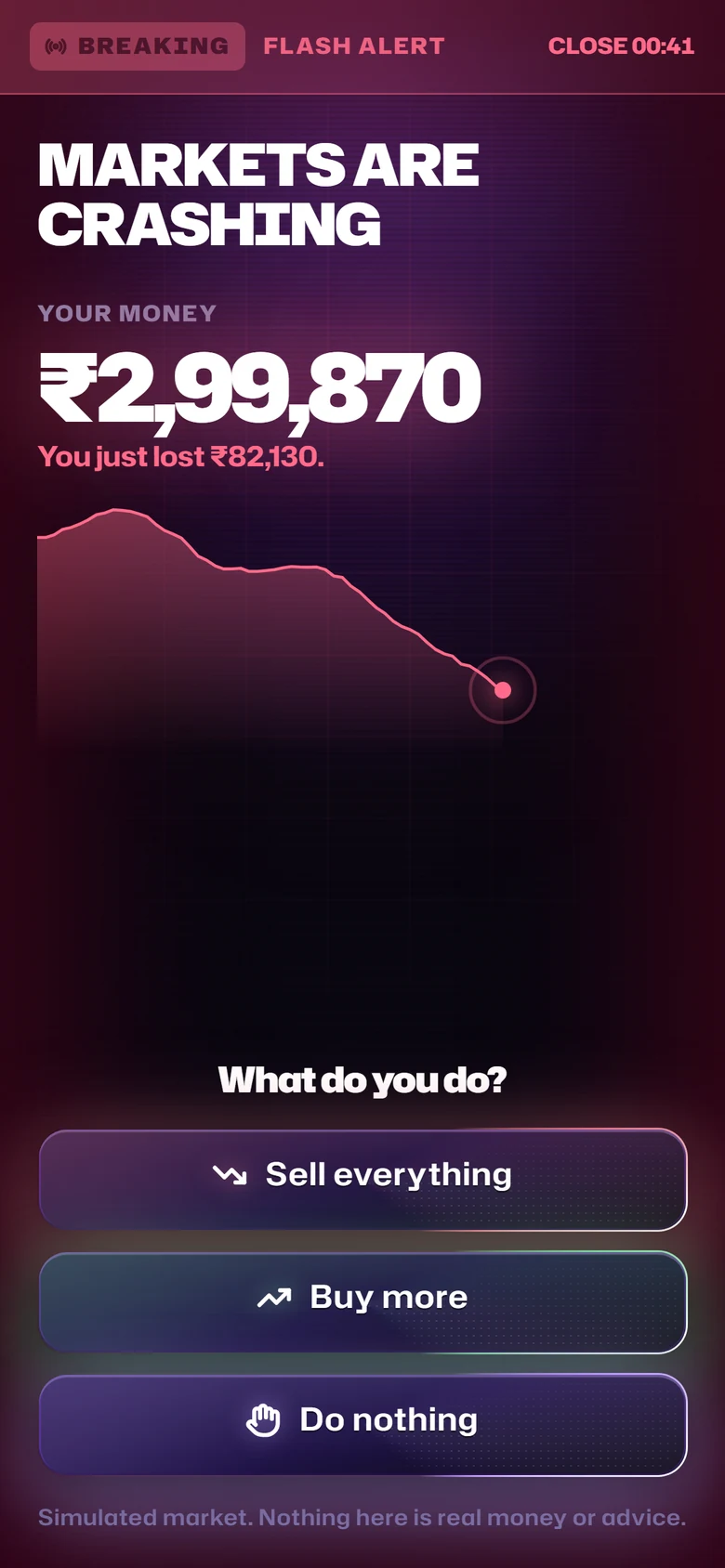
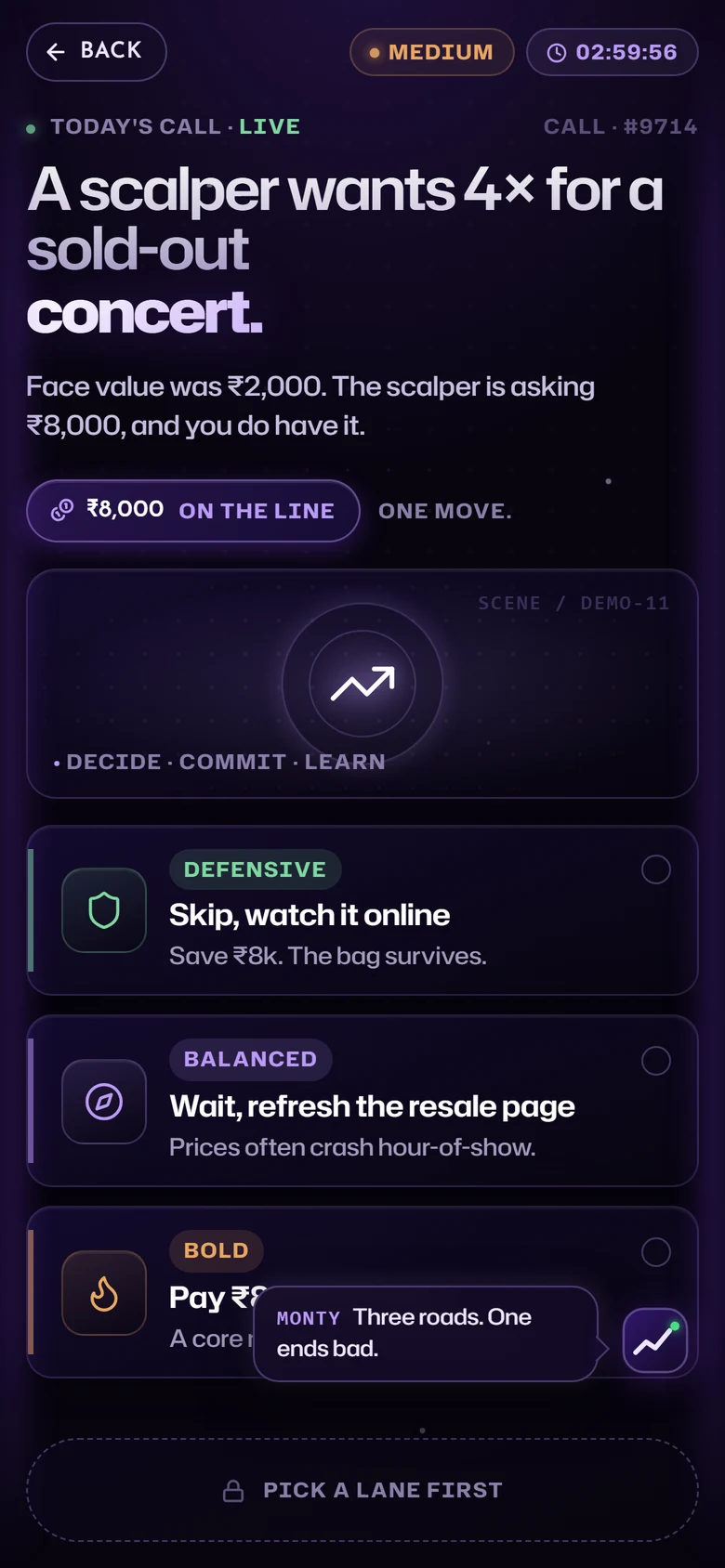
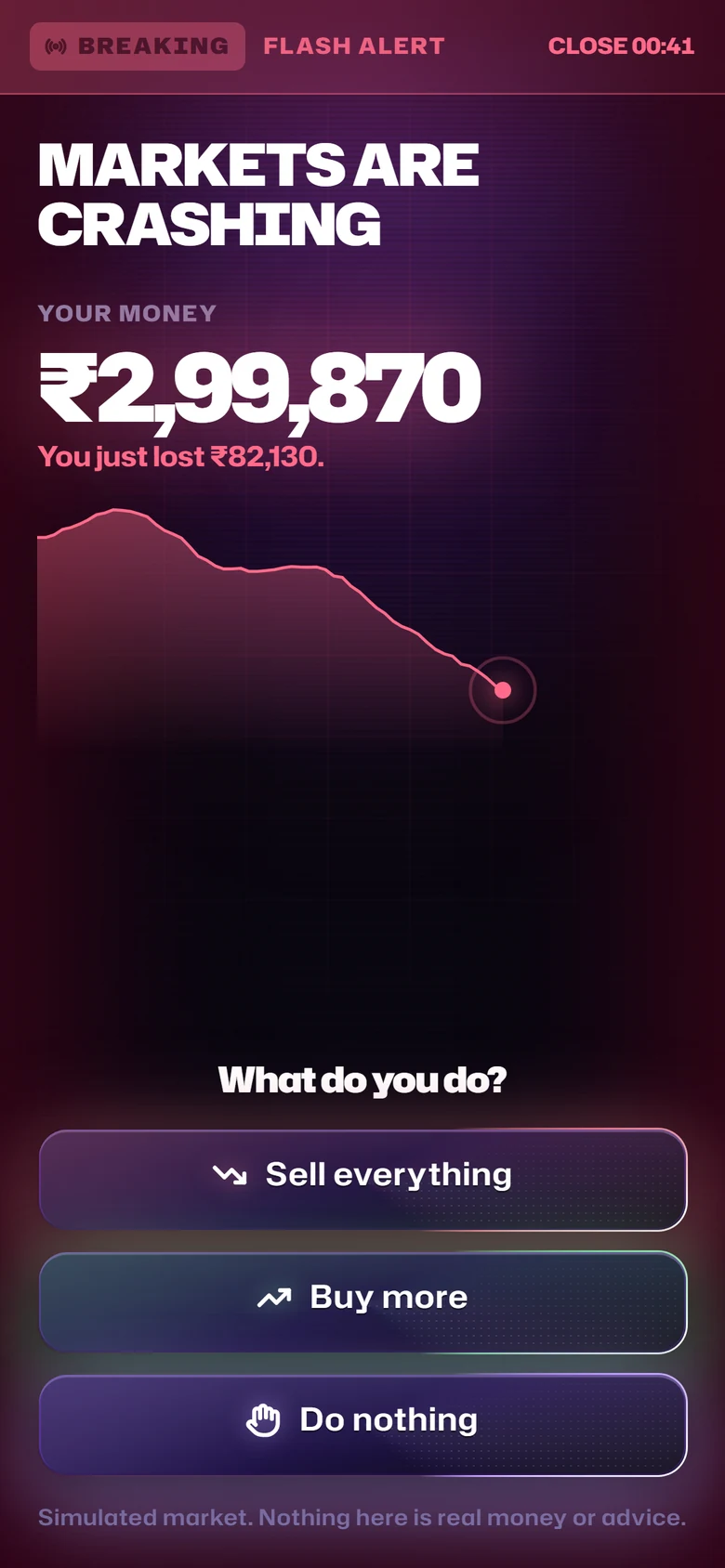
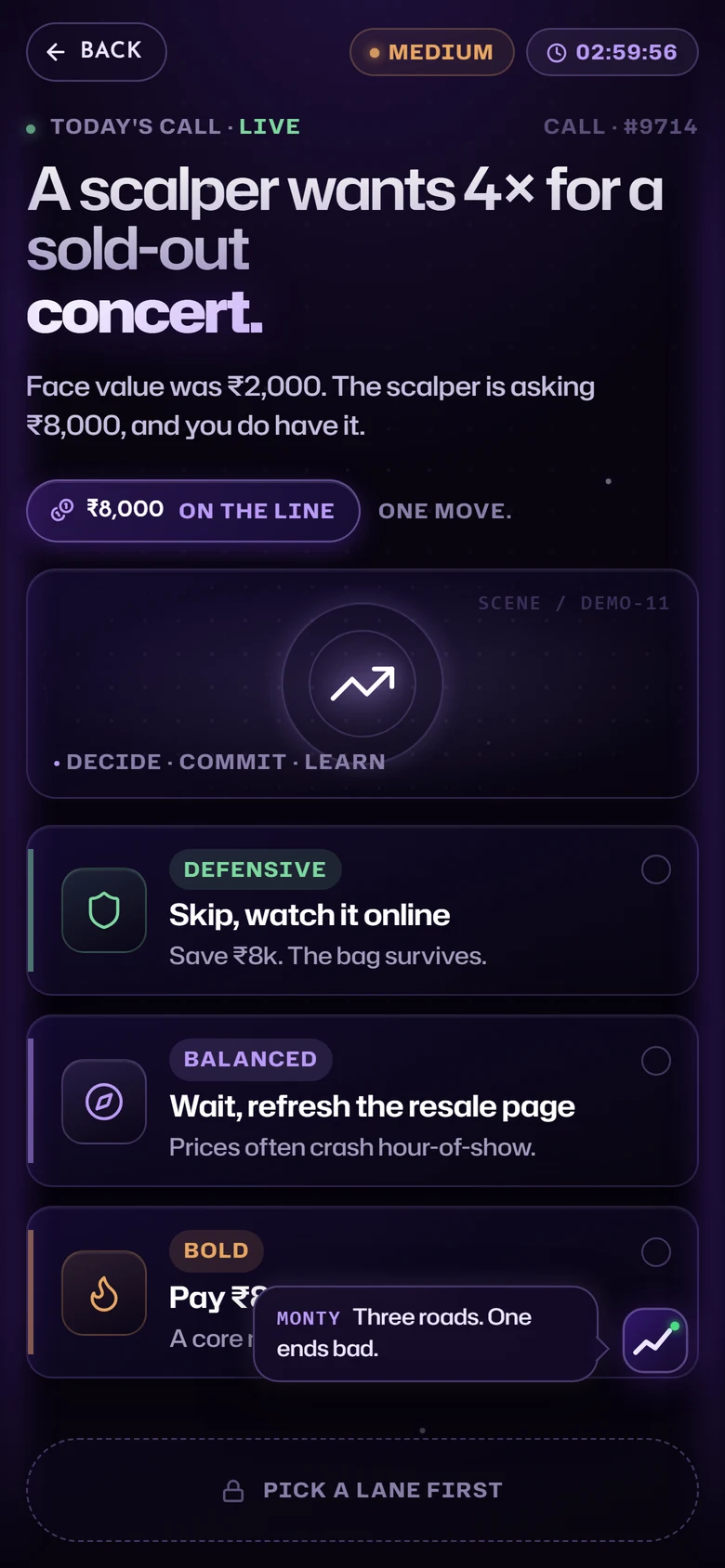
MarketPlay is a financial literacy game available on the web and Google Play and used by more than 800 people. Each scenario begins with a real market event and asks you to choose Defensive, Balanced or Bold. A six-part result then shows how that choice affected your net worth. The product also includes 290+ short lessons across Money Basics and Stock Market, more than 30 interactive calculator chapters, a 32-decision Life simulator and ₹1,00,000 in simulated paper trading with order validation, fills, settlement and live P&L. A six-tab dashboard lets me review the product and approve work prepared by ten task-specific backend tools. I designed and built every part myself.
Market scenarios
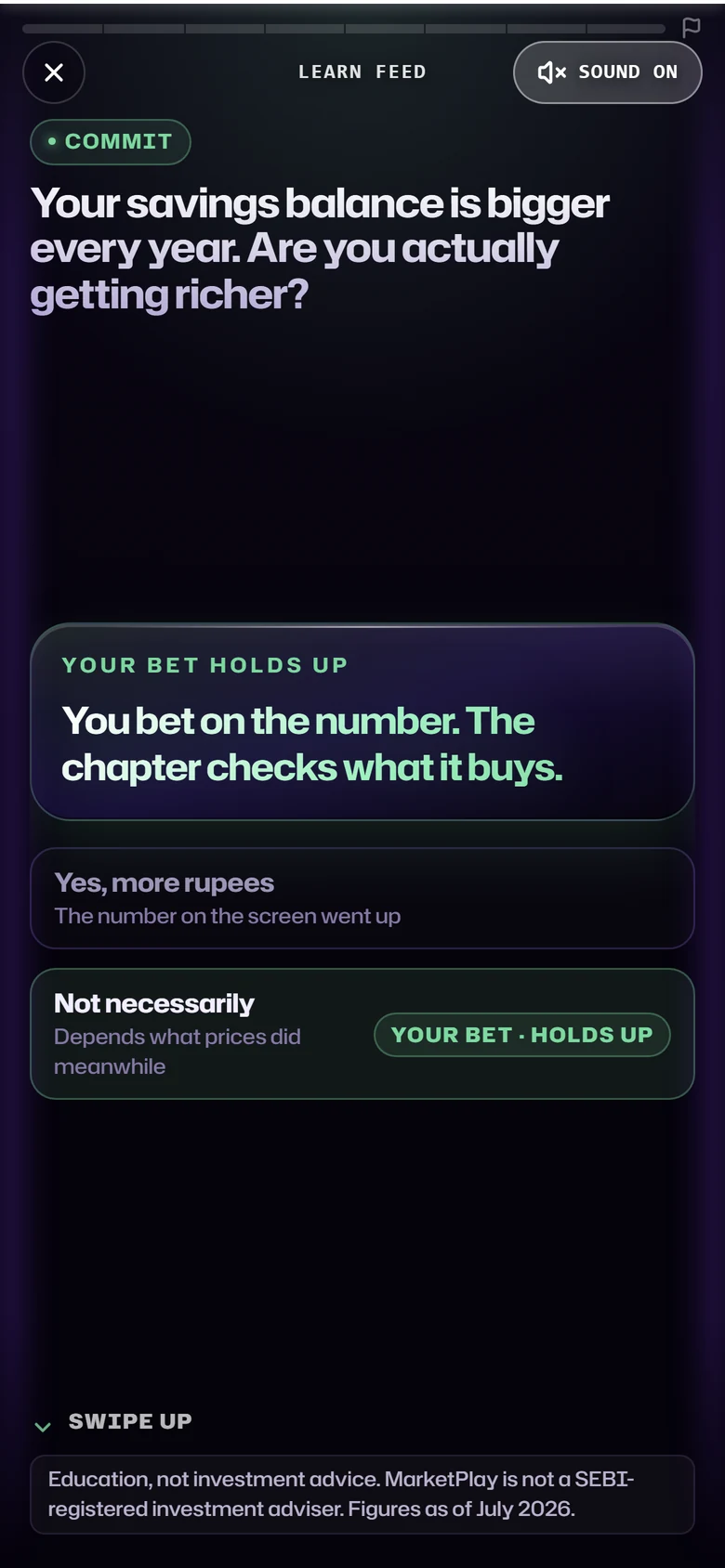
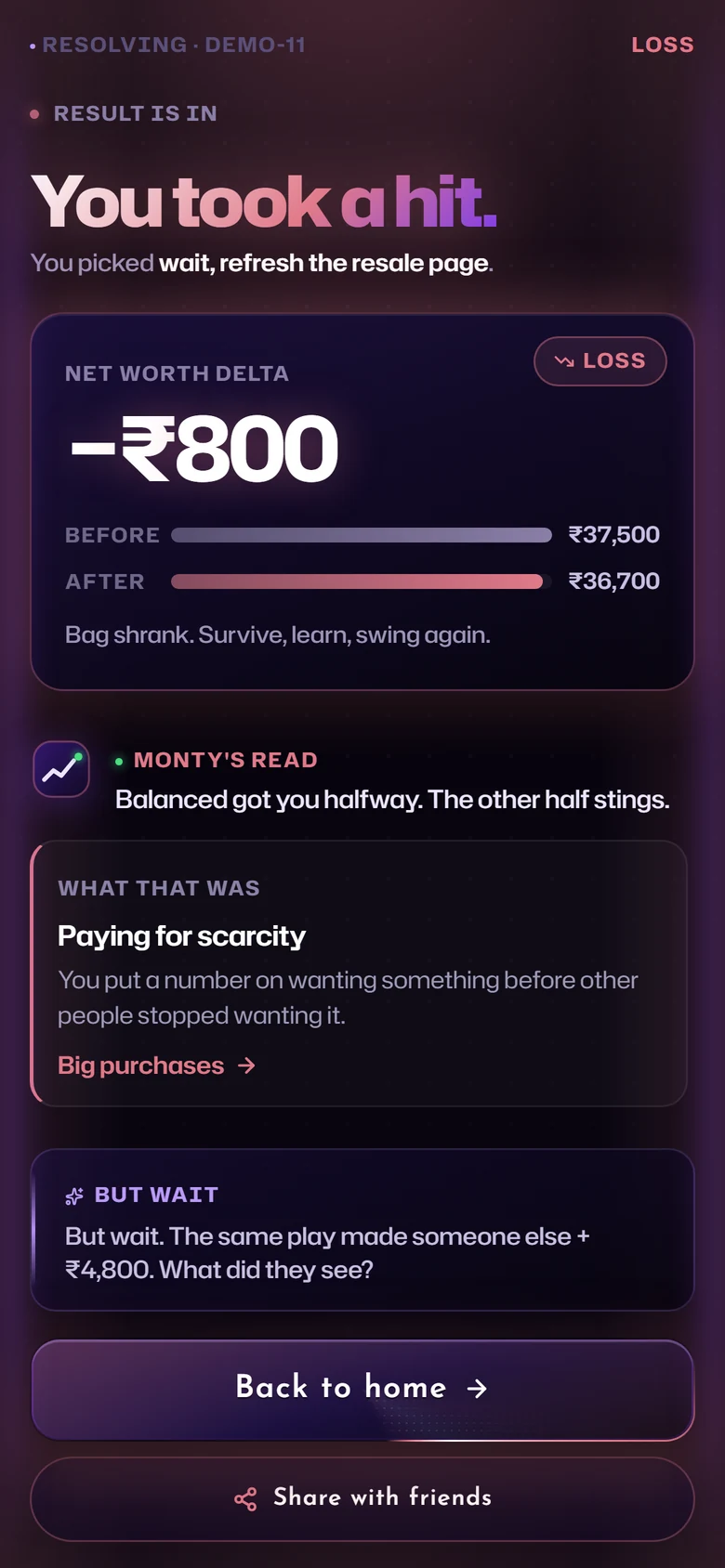
Fullscreen market events, one irreversible choice and a six-part explanation of the result.
290+ short lessons
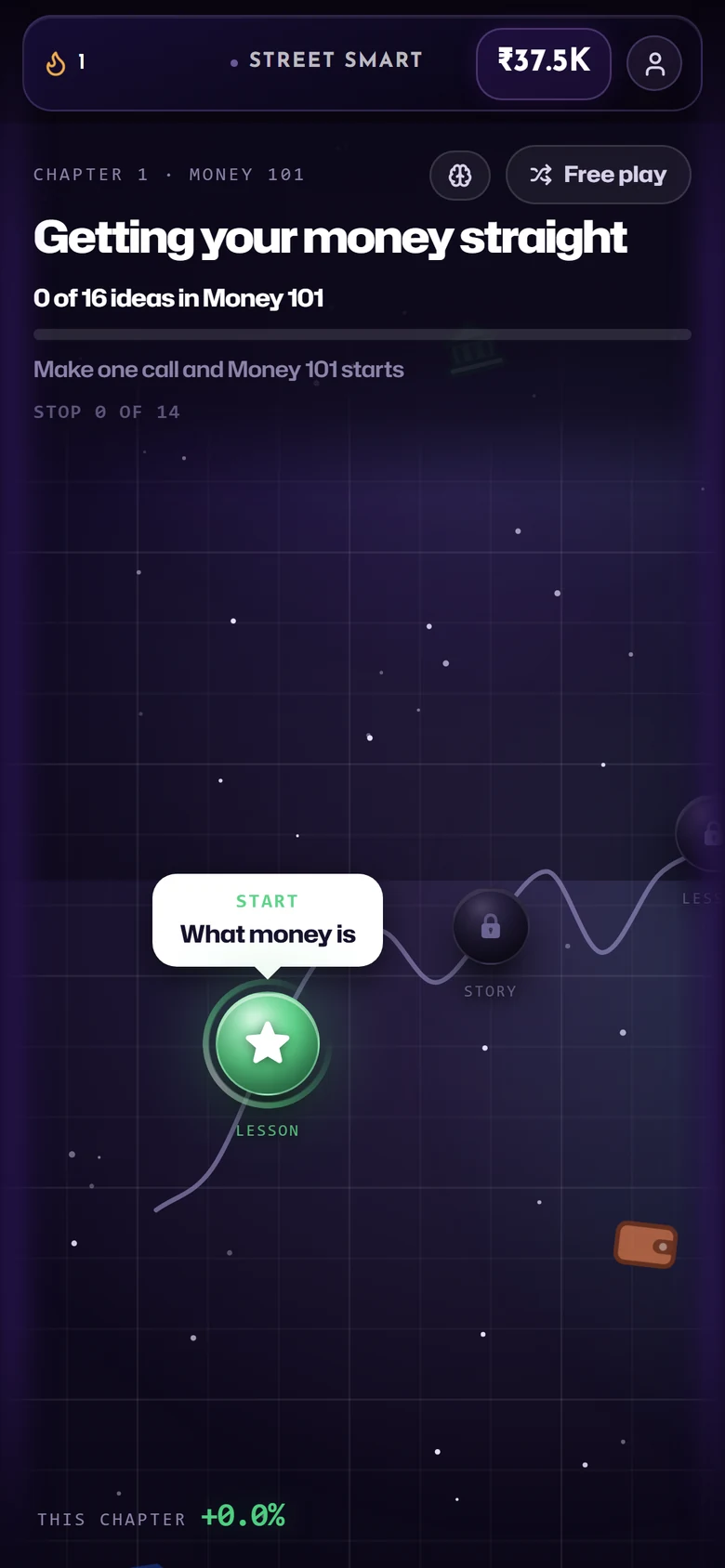
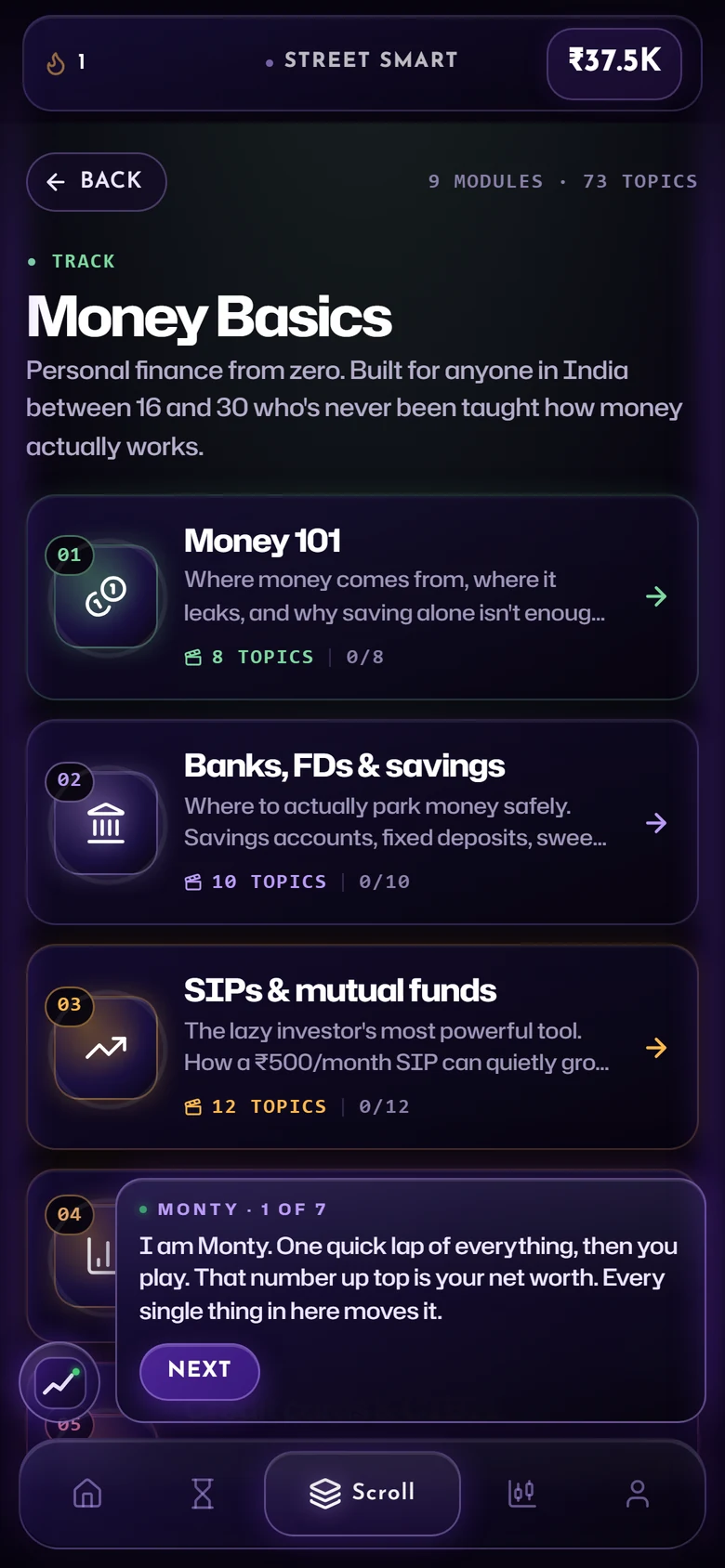
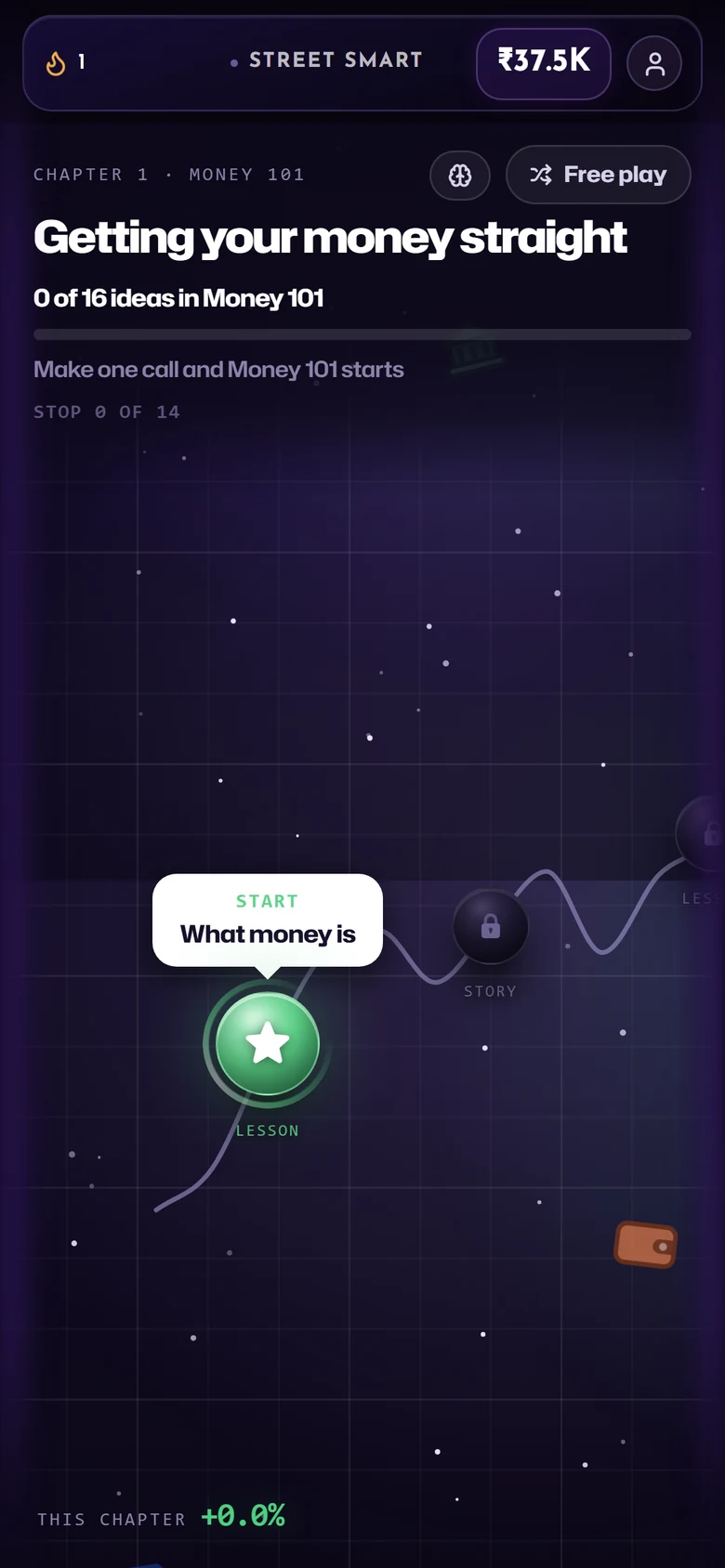
Vertical lessons across Money Basics and Stock Market, with checkpoint tests between modules.
30+ interactive calculators
Slider-based chapters on FDs, tax, RSI, MACD, Bollinger Bands and Fibonacci, with purpose-built visualisations.
32-decision Life simulator
Moves through financial life stages across 32 decisions and charts how net worth changes over time.
Paper trading
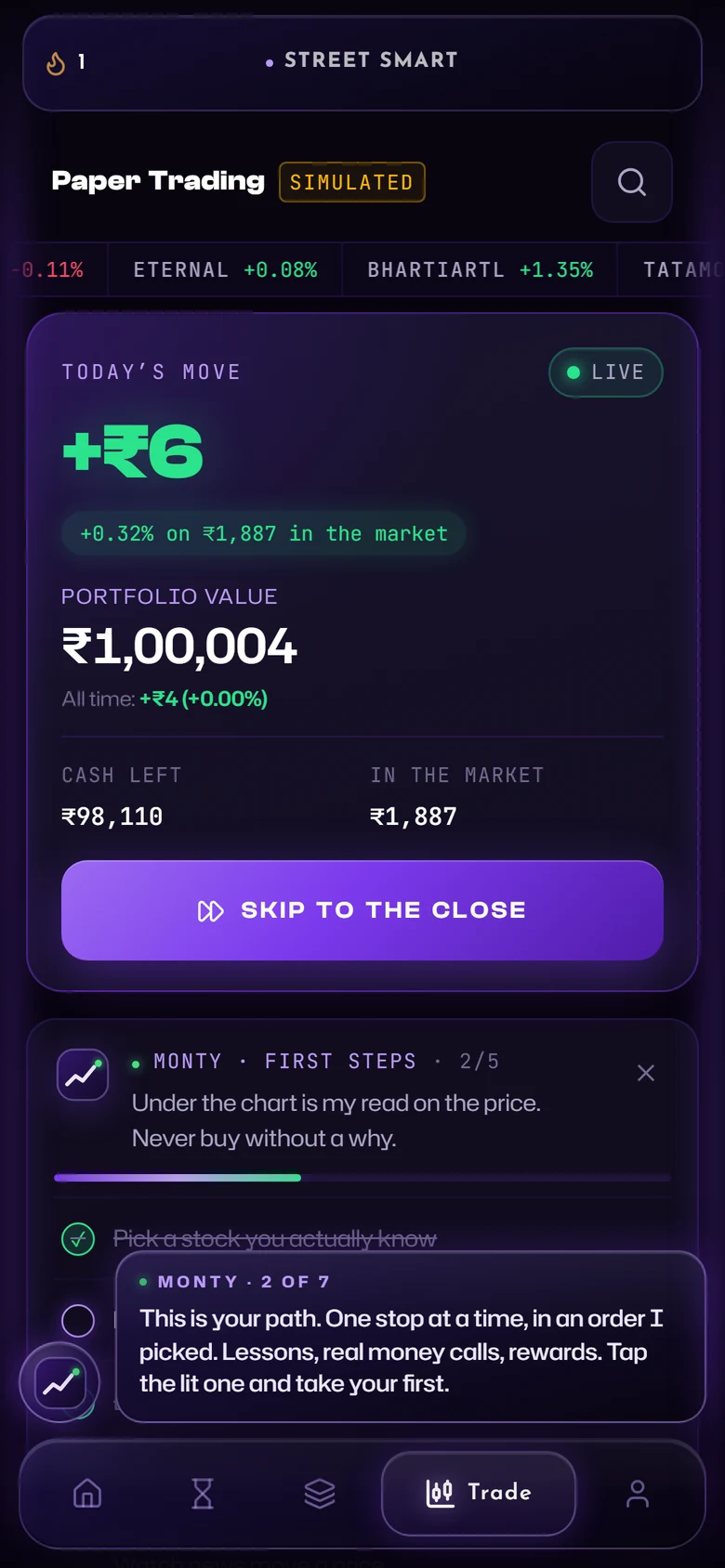
₹1,00,000 in simulated money with order validation, fills, settlement, positions and day P&L, without a brokerage account or KYC.
Review dashboard
A six-tab dashboard for product analytics and approving work prepared by ten task-specific backend tools.
The breakdown
The problem
Financial literacy content for Indian teenagers is either a textbook or a finfluencer telling them what to buy. Both fail for the same reason: neither lets you be wrong cheaply. Nobody learns what risk feels like by reading a definition of it, and nobody should learn it with real money at eighteen.
The approach
Make each decision irreversible and show the consequence clearly. A real market event appears fullscreen, you choose Defensive, Balanced or Bold, and you cannot undo it. A six-part explanation then shows what that decision did to your net worth. The curriculum explains the concept, the calculators show the maths, paper trading lets you practise the mechanics, and the life simulator follows the effects over several decades.
How it is put together
- Scenario system
- Real market events modelled as branching decisions with a scored outcome, explained in six parts rather than shown as a single result screen.
- 21-module reel curriculum
- Vertical lessons across Money Basics and Stock Market, with checkpoint tests that must be completed before the next module opens.
- 30+ calculator chapters
- FDs, tax, RSI, MACD, Bollinger Bands and Fibonacci, each explained through a slider-based visualisation rather than a static form.
- Simulated broker
- Order validation, fills, settlement, positions and day P&L, modelled closely enough to teach the mechanics that matter on a real broker.
- Ten automated roles
- Ten task-specific tools prepare operational work, with human approval required for every action.
- Review dashboard
- A six-tab analytics dashboard for reviewing the product and supervising the automated work.
Calls that could have gone the other way
Every automated action needs human approval
Software that can act without review is too risky for a product aimed at teenagers. Requiring approval makes the work slower, but keeps a person accountable.
One irreversible decision per scenario, no undo
An undo button would remove the consequence the lesson is meant to teach.
Built the calculators rather than embedding existing ones
Existing calculators were mostly forms. I wanted learners to see the curve change as they moved a slider, which required a custom visualisation.
Paper trading models settlement, not just price
Most simulators skip the boring parts, which are exactly the parts that surprise people on their first real trade.
Inside MarketPlay
From the first call to the next decision.
08 screens · Select to view full size